
Minneapolis Grieving : Resilience, Resistance, and Minnesota Nice in a Time of Violence
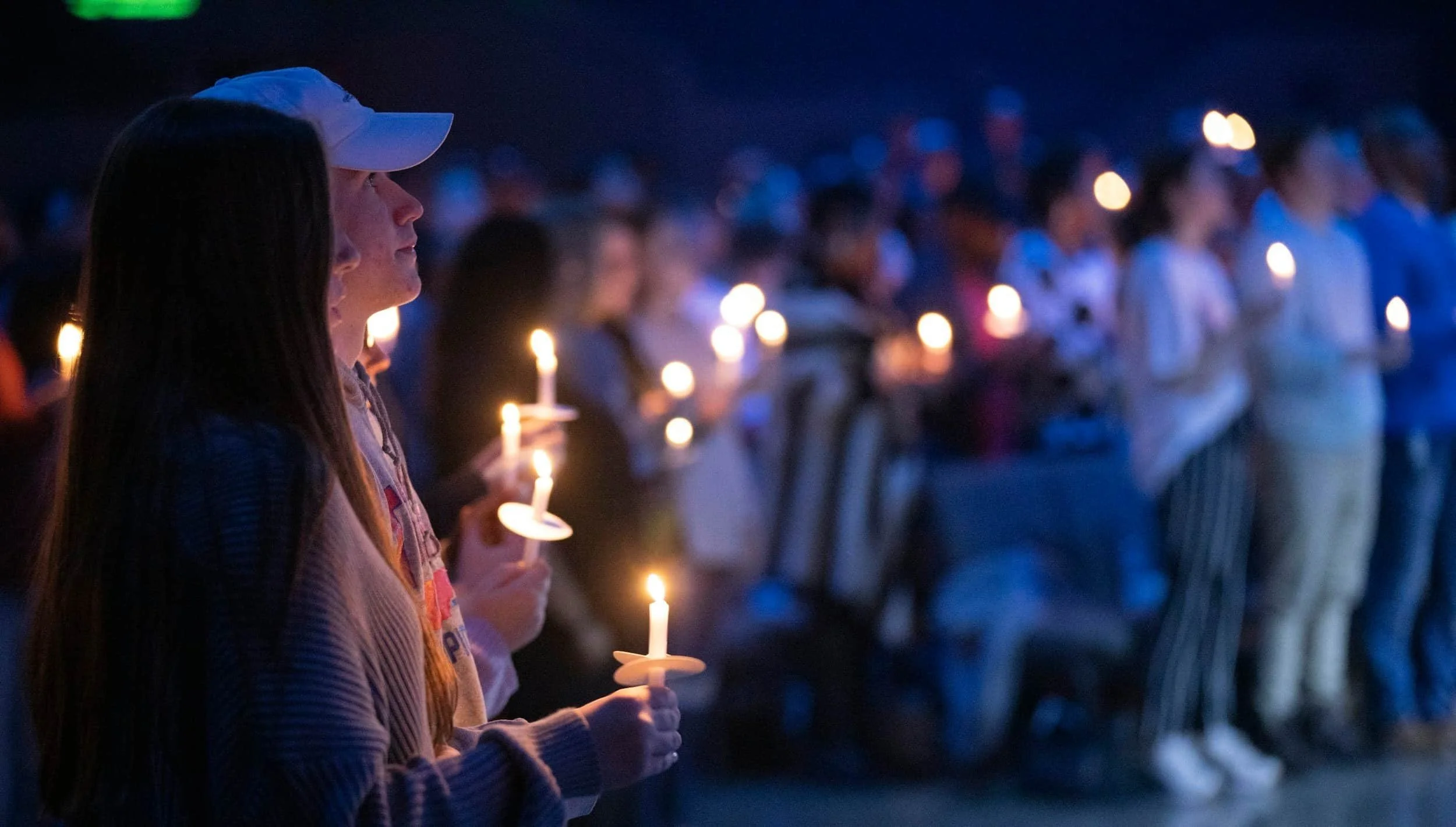
As someone who has lived in Minnesota, it is no surprise that the assault on ordinary life in Minneapolis has pulled the city together in a way that transcends its usual divisions. When an outside force arrives with intimidation, when the federal government becomes a source of fear rather than protection, people from every walk of life begin to unite to defend their community. In moments like this, a city stops being a collection of separate lives and becomes a shared body, joining together.
I lived in Rochester, Minnesota for 11 years and still carry a deep respect for the steady, community-minded care so often associated with “Minnesota nice.” That history makes what is happening in Minneapolis feel especially close, even from afar.
From my perspective as a grief coach, this kind of continued unwanted interference by the government is not simply stressful. It is destabilizing in a way that becomes embodied. When violence touches a community repeatedly, the aftermath is not only measured in headlines or statistics. It is felt in the body’s vigilance, in the tightening of routines, and in the negotiations people make each day just to feel safe enough to function. It becomes harder to trust what will happen next, and harder to make meaning in a world that feels less predictable.
Violence not only threatens lives, it alters the psychological ecosystem of a community. It changes how people move through everyday spaces; it changes how families make decisions about going to school or work or the grocery store. Harm becomes not just an event, but an atmosphere, and many people begin living with a background vigilance that is exhausting to sustain.
In recent weeks, Minneapolis has been shaped by the presence of federal immigration enforcement and by the rupture of normalcy by repeated threats and violence. These events have not only created fear, but also moral fatigue: the exhaustion that comes from witnessing harm and feeling that accountability remains out of reach. Even those who are not directly impacted find themselves carrying a mix of numbness and hyper-awareness, unsure whether to look away in self-protection or lean in toward what feels unbearable.
In the face of that overwhelm, the mind often reaches for certainty. It wants to simplify. It wants clean categories: safe or unsafe, good or bad, threat or protection. But this moment is not simple. Minneapolis is holding multiple realities at once, and the only honest response is to make room for complexity, even when complexity hurts.
And still, alongside the grief, another story continues to unfold.
The story of resilience.
The story of resistance.
The story of Minnesota nice, not as politeness or passivity, but as an ethic of care practiced in public.
Grief That Accumulates
Many people think of grief as something that can be completed. As if grief is a tunnel with a visible exit, and healing means getting to the other side. But grief does not work like that, and grief coaching often begins by challenging this myth. This is especially true when loss is repeated, when harm continues, or when a community is asked to metabolize trauma while still trying to live a day to day life.
Grief does not resolve so much as it changes. It retreats and it returns. It settles into the body and it can continue to show up uninvited. In personal grief, this is often difficult enough. But in cumulative grief, the weight can feel even harder to hold because there is rarely a clean ending. The conditions that created the grief are often still present.
This is grief that accumulates. It builds in layers. It becomes grief carried forward while new losses arrive. It becomes the kind of grief that can make people feel raw and reactive.
In Minneapolis right now, the grief is not only for those who have died. It is also grief for what has been threatened: dignity, safety, and a sense of protection people should be able to expect from public institutions. It is the grief of families trying to remain steady while feeling exposed. It is the grief of communities who have long known what it is like to live with fear, now watching that fear expand across more households, more neighborhoods, more conversations.
When grief has no clear resting place, people often swing between numbness and panic. Some pull away because the pain feels too large. Others become consumed by urgency, living on adrenaline in a way that is not sustainable. Both responses make sense. Both are attempts to survive.
But there is another response, when people refuse to grieve in isolation. Community becomes the place where grief can be held, not as a problem to solve, but as something real that must be witnessed and honored. The intensity of grief can be lessened when shared in community.
Minnesota Nice as Community Action
Minnesota nice is a cultural stereotype: a kind of politeness that avoids conflict, that smiles rather than speaks, that keeps feelings contained. That version exists, but it is not the whole story, and it is not what is emerging in Minneapolis right now.
There is another form of Minnesota nice, one that is better understood as community action. It is not a personality quirk. It is a cultural instinct toward mutual responsibility. It is what happens when neighbors refuse to let someone carry the worst day of their life alone.
This care shows up in the quiet ways people stabilize each other. It shows up in vigils and memorials, where strangers bring food, water, and comfort without being asked. It shows up in community networks that begin operating before official support arrives. It shows up in the way people check in on families who may be at risk, not with pity, but with solidarity.
These gestures are not small. They are nervous system interventions. They remind people, who both give and receive, in the most concrete way possible, that they are not alone. That they matter. That the community still exists, even when safety feels uncertain.
It also shows up in the courage of witnessing. When enforcement tactics create intimidation, one of the strongest protections a community has is presence. People who document. People who accompany. People who stand close enough to say, “You are seen.” That is not passive kindness. That is care as resistance.
Minnesota nice, in this fuller sense, is not about avoiding discomfort. It is about refusing indifference. It is the decision to stay human in public, especially when fear tries to shrink the circle of who counts.
Resistance Is Not Only Protest. It Is Connection.
Resistance is often imagined as dramatic, visible, and loud. Sometimes it is. Minneapolis knows what public protest looks like, and has long been shaped by people demanding change in the streets, in the courts, and in institutions that often require disruption in order to bring change.
But resistance also looks like community.
It looks like people refusing to turn on each other. It looks like cross-cultural solidarity in neighborhoods where fear tries to isolate people from their own support systems. It looks like continuing to speak someone’s name, and to speak the truth, even when those in power tell us what we see isn’t what happened and to move on.
Resistance is what happens in conversations and kitchens. It happens in faith communities, neighborhood groups, and community centers. It happens when people freely share resources. It happens when people make plans to keep children safe, to accompany elders, to protect those who may be targeted, to ensure someone gets home with dignity intact.
Because the goal of intimidation is not only control. It is isolation. It is to convince people that gathering is unsafe. That speaking is dangerous. That defending each other will cost too much.
So every time we stay connected, we resist.
The Strength of Staying Human
In times marked by violence, there is pressure to become hardened. Some people harden into cynicism, as if caring too much is naïve. Others harden into rage. Others harden into avoidance because the pain feels too costly. These responses are understandable. When the world feels unsafe, the nervous system protects itself however it can.
But the strength most needed in moments like this is not hardness. It is the strength to stay human.
Staying human means allowing grief to be real. It means refusing to normalize violence. It means refusing to treat lives as disposable. It means recognizing that communities are not built only through shared joy, but also through shared protection, shared accountability, and shared mourning.
In grief coaching, this is often described as values-based resilience: the ability to remain aligned with values such as fairness and decency, even when the world makes it tempting to shut down. Staying human also means living with complexity.
It means letting go of black-and-white thinking and making room to include “both” and “and”. It means acknowledging that people can be both grieving and still functioning, afraid and still courageous, exhausted and still committed. This kind of resilience is not performative. It is grounded. It is embodied. It is what people do when they choose to remain morally awake.
In Minneapolis, this kind of strength can be seen not only in big public moments, but in the quieter daily choices that shape a community’s moral center. It shows up in small refusals: refusal to dehumanize, refusal to look away, refusal to let fear turn neighbor against neighbor. These choices may not make headlines, but they are the scaffolding of collective resilience. Over time, they determine what kind of community is built in the aftermath of this turmoil.
What We Are Really Protecting
This is not only about policy. It is about belonging.
It is about who is seen as fully human. It is about whose fear gets dismissed and whose grief is taken seriously. It is about who is protected and who is treated as disposable.
And it is about the kind of city Minneapolis decides to be, even when forces larger than the city attempt to define it.
This is what I know about resilience: it is not a personality trait. It is a relational practice. It grows in community. It grows when our grief is witnessed. It grows when we refuse to let the worst things we see become the whole story.
Resilience looks like the hard decision to keep choosing humanity even in the face of ongoing threat and intimidation.
It looks like neighbors showing up. It looks like community protection. It looks like Minnesota nice, not as politeness, but as mutual responsibility.
And in a time of federal immigration enforcement and violence in Minneapolis, that kind of niceness is what allows healing.
Conclusion: What It Means to Stay
In times like these, it can feel tempting to look away, not because people do not care, but because caring hurts. Violence, uncertainty, and intimidation can make the world feel like it is shrinking, as if the safest option is to disengage. And yet, what makes Minneapolis so striking in this moment is not that it is untouched by fear, it is that so many people are refusing to let fear become the whole story.
That refusal matters. It is not abstract. It shows up in real choices: to stay connected, to check on a neighbor, to witness rather than ignore, to speak with humanity rather than contempt, to hold complexity without surrendering to confusion or apathy. It is the decision, again and again, not to let grief turn into indifference.
From a grief coach’s perspective, this is what resilience actually looks like. It is not about being unbothered. It is not about “moving on.” It is not about denying what has happened. Resilience is the capacity to keep showing up with integrity, even when the nervous system is tired, even when the answers are incomplete, even when grief remains unresolved. It is the willingness to live with “both/and,” to name harm clearly while still practicing care.
Minneapolis is grieving. Minneapolis is exhausted. Minneapolis is still here.
And the community care often called Minnesota nice, at its best, is not a shallow politeness. It is a form of public responsibility. It is what happens when people refuse to abandon one another, especially in moments when abandonment might feel easiest.
That kind of care does not erase grief. It does not fix what has been broken, but it does something powerful; it helps Minneapolis maintain its humanity.
It is resistance. It is resilience. It is what will allow community healing. In the future, history will remember that Minnesotans were not passive, that they were able to strongly hold on to and live by their “Minnesota nice” values.
* * * * * * *
If this moment is stirring grief, fear, anger, or moral fatigue, it may help to have a steady space to process what you are carrying. Grief coaching can support you in working with ongoing grief, collective grief, and the exhaustion that comes from living in uncertain times, while staying connected to your values and capacity. If you would like to explore that kind of support, you are welcome to learn more about grief coaching through Mindful Grief Coaching.
